
Social media has transformed from a simple communication platform into one of the most powerful digital marketing channels available to businesses. In 2026, social media is no longer just about posting updates and sharing photos. It has become a sophisticated ecosystem where brands build communities, generate leads, drive sales, provide customer support, and establish long-term customer relationships.
With billions of active users across various platforms, social media continues to offer businesses unparalleled opportunities to connect with their target audience. However, as technology evolves and consumer behavior changes, marketers must stay updated with the latest trends to remain competitive.
In this comprehensive guide, we’ll explore the most important social media marketing trends every business should follow in 2026 to maximize engagement, increase brand awareness, and achieve sustainable growth.
Why Social Media Marketing Remains Essential
Social media marketing continues to be one of the most cost-effective ways for businesses to reach potential customers. Whether you’re a local business, eCommerce brand, startup, or service provider, social media provides direct access to your audience.
Key benefits include:
- Increased brand awareness
- Better customer engagement
- Higher website traffic
- Improved lead generation
- Enhanced customer loyalty
- Greater sales opportunities
- Real-time customer feedback
Businesses that actively leverage social media often outperform competitors that rely solely on traditional marketing methods.
The Evolution of Social Media Marketing
Over the past decade, social media has evolved significantly.
What started as platforms for connecting friends and family has transformed into powerful marketing ecosystems featuring:
- AI-powered recommendations
- Advanced advertising systems
- Social commerce
- Creator partnerships
- Live streaming
- Community building
- Personalized content delivery
Businesses must adapt to these changes to remain relevant in an increasingly crowded digital landscape.
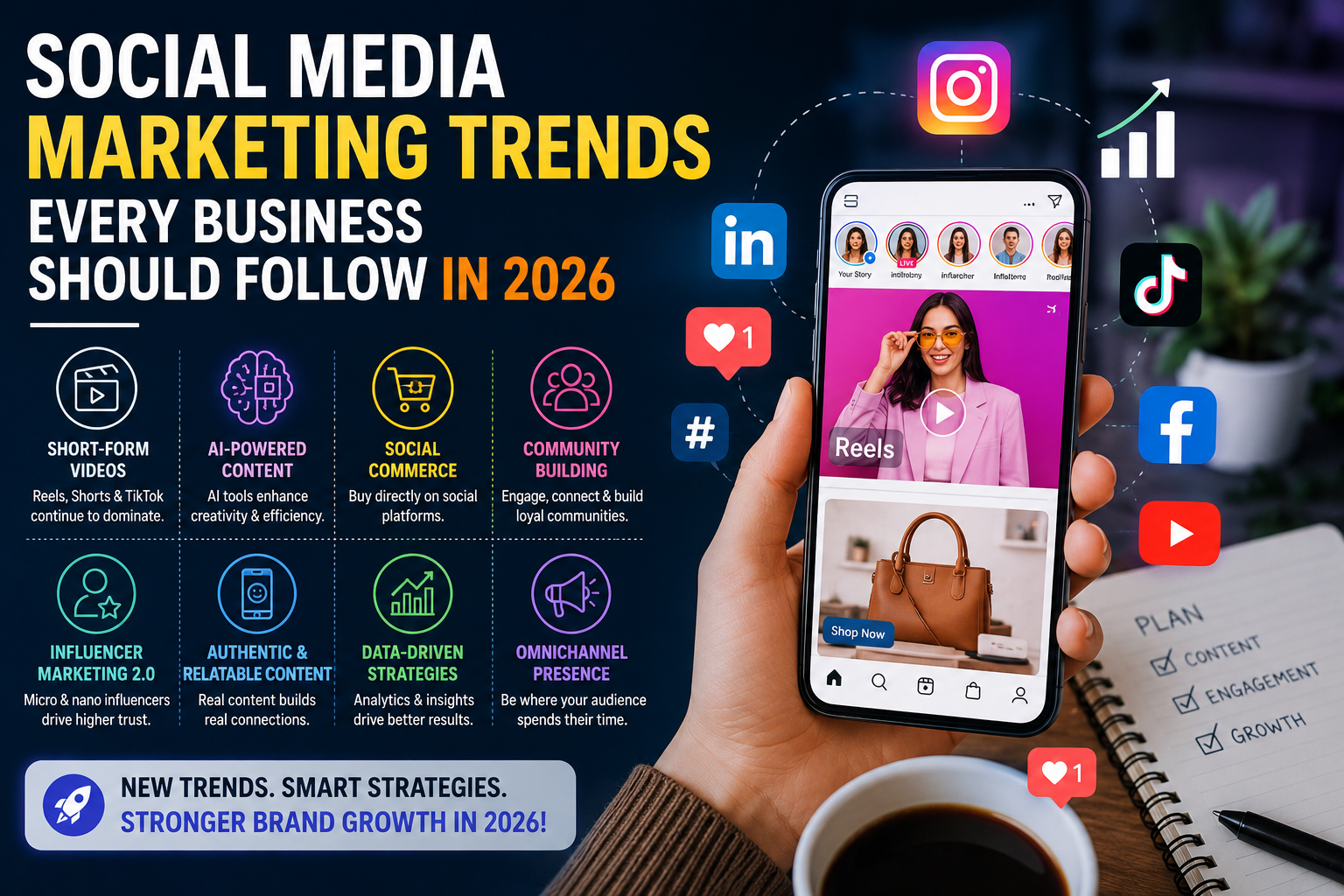
Trend #1: Short-Form Video Continues to Dominate
Short-form video remains the most engaging content format in 2026.
Platforms such as:
- Instagram Reels
- YouTube Shorts
- TikTok
- Facebook Reels
continue to prioritize video content in their algorithms.
Why Short Videos Work
Short-form videos:
- Capture attention quickly
- Increase engagement rates
- Improve content reach
- Encourage shares
- Boost brand visibility
Consumers increasingly prefer watching videos over reading lengthy text posts.
Best Practices
Businesses should create videos that:
- Deliver value quickly
- Address customer problems
- Showcase products
- Share tips and tutorials
- Highlight customer success stories
Authenticity often performs better than overly polished promotional content.
Trend #2: AI-Powered Content Creation
Artificial Intelligence has become a major part of social media marketing.
AI tools now assist with:
- Content generation
- Caption writing
- Video editing
- Audience analysis
- Trend prediction
- Ad optimization
Benefits for Businesses
AI helps marketers:
- Save time
- Increase productivity
- Generate content ideas
- Improve campaign performance
- Personalize messaging
However, businesses should combine AI efficiency with human creativity to maintain authenticity.
Trend #3: Social Commerce Continues to Grow
Social media platforms are increasingly becoming shopping destinations.
Consumers can now discover, evaluate, and purchase products without leaving their favorite apps.
Popular Social Commerce Features
- Instagram Shops
- Facebook Marketplace
- TikTok Shop
- Pinterest Shopping
- YouTube Product Tags
Benefits for Businesses
Social commerce:
- Reduces buying friction
- Increases conversions
- Improves customer experience
- Drives impulse purchases
Businesses that integrate shopping experiences directly into social platforms often see improved sales performance.
Trend #4: Authenticity Wins Over Perfection
Modern consumers are becoming more skeptical of highly polished advertisements.
They prefer brands that appear genuine, transparent, and relatable.
Consumers Value Real Experiences
Audiences respond positively to:
- Behind-the-scenes content
- Employee stories
- Customer testimonials
- Product demonstrations
- Honest conversations
Building Trust
Businesses that show their human side often develop stronger relationships with their audience.
Authenticity helps build:
- Credibility
- Loyalty
- Engagement
- Brand trust
In 2026, genuine content often outperforms overly promotional messaging.
Trend #5: Community Building Becomes a Priority
Successful brands are focusing less on followers and more on communities.
Why Communities Matter
Strong communities create:
- Customer loyalty
- User-generated content
- Brand advocacy
- Increased engagement
Customers who feel connected to a brand are more likely to become repeat buyers.
Community-Building Strategies
Businesses can build communities by:
- Hosting live sessions
- Creating exclusive groups
- Encouraging discussions
- Responding to comments
- Sharing user-generated content
Community-driven marketing often leads to long-term customer retention.
Trend #6: Influencer Marketing Continues to Evolve
Influencer marketing remains highly effective, but the focus is shifting toward smaller creators.
Rise of Micro-Influencers
Micro-influencers typically have:
- Smaller audiences
- Higher engagement rates
- Strong niche authority
- Greater audience trust
Many businesses now achieve better results working with multiple micro-influencers rather than a single celebrity influencer.
Benefits
Micro-influencer campaigns often provide:
- Better engagement
- Lower costs
- More authentic recommendations
- Higher conversion rates
Trend #7: User-Generated Content Becomes More Valuable
User-generated content (UGC) is becoming a critical marketing asset.
What Is UGC?
UGC includes:
- Customer reviews
- Photos
- Videos
- Testimonials
- Social media mentions
Why It Works
Consumers trust recommendations from real customers more than traditional advertising.
UGC helps businesses:
- Build credibility
- Increase engagement
- Improve conversions
- Strengthen customer relationships
Encouraging customers to share their experiences can significantly enhance social media performance.
Trend #8: Personalized Content Experiences
Consumers increasingly expect personalized interactions.
AI-Powered Personalization
Social platforms now use AI to deliver highly relevant content based on user behavior.
Businesses should also personalize:
- Advertisements
- Product recommendations
- Messaging
- Email campaigns
- Content suggestions
Benefits
Personalization leads to:
- Better engagement
- Increased conversions
- Improved customer satisfaction
- Stronger loyalty
The more relevant the content, the more likely users are to interact with it.
Trend #9: Social Media Search Optimization
Social platforms are increasingly functioning like search engines.
Many users now search directly on platforms such as:
- TikTok
- YouTube
instead of using traditional search engines.
Optimizing for Social Search
Businesses should:
- Use relevant keywords
- Write descriptive captions
- Optimize profile information
- Include hashtags strategically
- Create searchable content
Social SEO is becoming a crucial component of digital marketing strategies.
Trend #10: Live Streaming Remains Highly Effective
Live content continues to generate strong engagement.
Popular Live Content Types
- Product launches
- Q&A sessions
- Tutorials
- Interviews
- Behind-the-scenes tours
Benefits
Live streaming helps businesses:
- Connect directly with audiences
- Build trust
- Increase engagement
- Showcase authenticity
Consumers appreciate real-time interaction and transparency.
Trend #11: Data Privacy and Transparency
As privacy regulations become stricter, businesses must prioritize ethical marketing practices.
Customer Expectations
Consumers want:
- Data protection
- Transparency
- Permission-based communication
- Secure interactions
Best Practices
Businesses should:
- Clearly explain data collection
- Obtain proper consent
- Protect customer information
- Maintain transparency
Trust plays a major role in long-term social media success.
Trend #12: Employee-Generated Content
Many businesses are encouraging employees to become brand advocates.
Why Employee Content Works
Employees often provide:
- Authentic perspectives
- Industry expertise
- Human connections
People tend to trust people more than brands.
Benefits
Employee-generated content can:
- Increase reach
- Build trust
- Improve engagement
- Strengthen employer branding
This trend is becoming increasingly popular among both B2B and B2C companies.
Trend #13: Cross-Platform Content Strategies
Businesses can no longer rely on a single social platform.
Algorithms change frequently, making diversification essential.
Multi-Platform Presence
Successful brands maintain active profiles across:
- YouTube
- TikTok
Content Repurposing
A single piece of content can be transformed into:
- Short videos
- Blog posts
- Infographics
- Email newsletters
- Social media posts
Repurposing content improves efficiency and maximizes reach.
Measuring Social Media Success
Tracking performance is essential for continuous improvement.
Key Metrics
Businesses should monitor:
- Reach
- Impressions
- Engagement rate
- Click-through rate
- Follower growth
- Conversion rate
- Return on investment (ROI)
Analytics Tools
Popular tools include:
- Meta Business Suite
- LinkedIn Analytics
- YouTube Studio
- TikTok Analytics
- Google Analytics
Data-driven decisions help businesses optimize campaigns and improve results.
Common Social Media Marketing Mistakes
Many businesses struggle because they make avoidable mistakes.
Posting Without a Strategy
Random content rarely produces meaningful results.
Ignoring Audience Engagement
Social media is a two-way conversation.
Overly Promotional Content
Constant sales messages can drive followers away.
Inconsistent Branding
Mixed messaging weakens brand identity.
Failing to Analyze Performance
Without tracking results, businesses cannot improve.
The Future of Social Media Marketing
Looking beyond 2026, social media will continue evolving through:
- Advanced AI integration
- Virtual reality experiences
- Augmented reality shopping
- Greater personalization
- Enhanced social commerce
- More immersive content formats
Businesses that stay adaptable and embrace innovation will remain competitive.
Conclusion
Social media marketing in 2026 is more dynamic, personalized, and powerful than ever before. Businesses that embrace emerging trends such as short-form video, AI-powered content, social commerce, community building, influencer partnerships, and personalized experiences can gain a significant competitive advantage.
Success on social media is no longer about simply posting content. It requires understanding audience behavior, creating authentic experiences, leveraging data, and adapting to changing technologies.
Companies that invest in modern social media marketing strategies will be better positioned to increase brand awareness, build meaningful customer relationships, generate qualified leads, and drive long-term business growth.
For businesses seeking sustainable success in the digital age, staying ahead of social media trends is not optional—it is essential.