
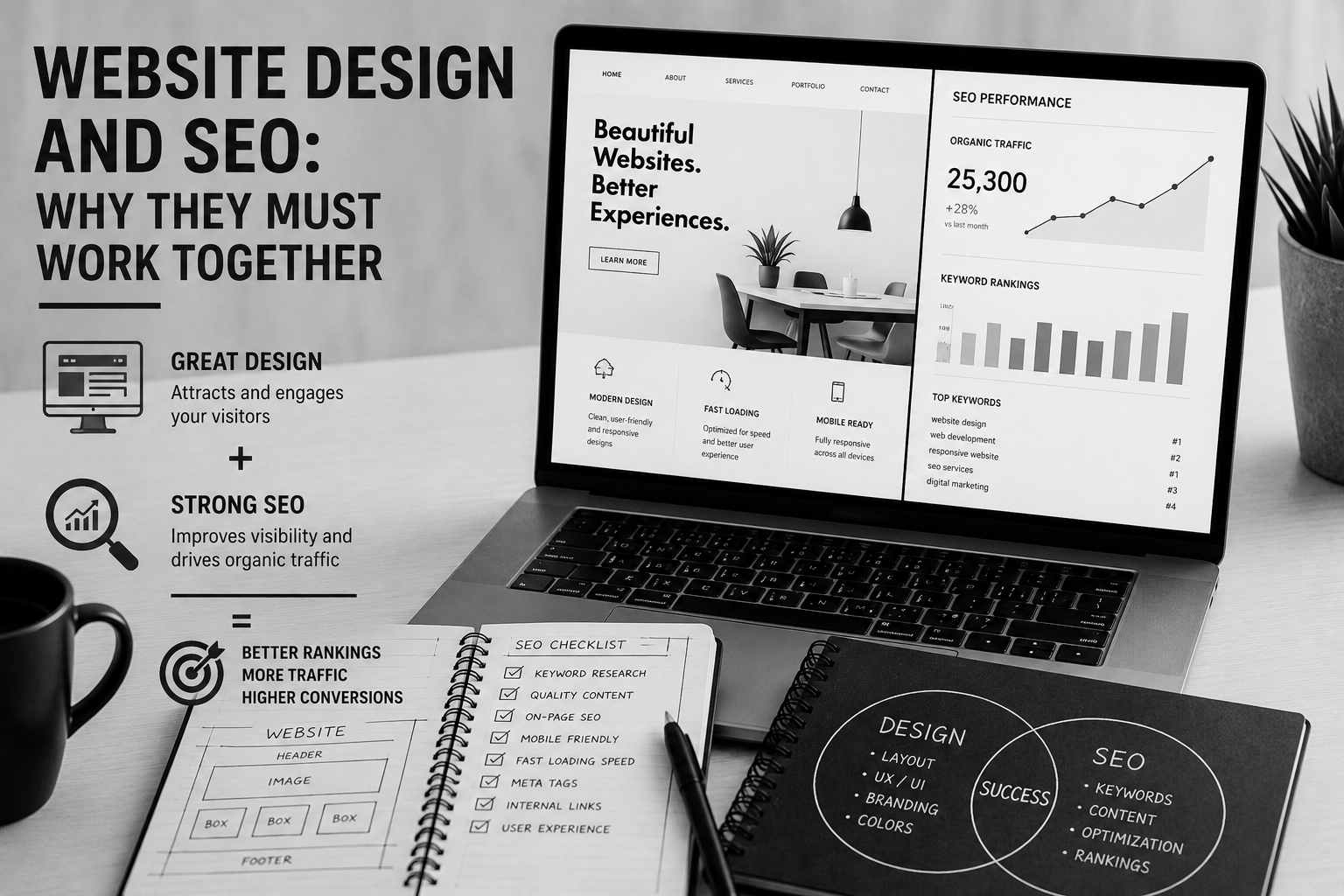

In today’s digital landscape, having a visually appealing website is no longer enough to ensure online success. Likewise, focusing solely on Search Engine Optimization (SEO) without considering user experience can limit your website’s potential. To achieve sustainable online growth, businesses must understand that website design and SEO are not separate strategies—they are interconnected elements that work together to improve visibility, user engagement, and conversions.
A beautifully designed website that cannot be found on search engines will struggle to attract visitors. Similarly, a website that ranks well but offers a poor user experience may fail to convert visitors into customers. The most successful websites combine exceptional design with strong SEO practices to create a seamless experience for both users and search engines.
In this guide, we’ll explore why website design and SEO must work together and how businesses can leverage both to maximize online success in 2026.
Understanding Website Design
Website design involves the planning, creation, and maintenance of a website’s visual appearance, layout, functionality, and user experience.
A well-designed website should:
- Be visually appealing
- Load quickly
- Be easy to navigate
- Function properly on all devices
- Guide visitors toward desired actions
- Reflect the brand’s identity
Modern website design focuses not only on aesthetics but also on usability and performance.
Understanding SEO
Search Engine Optimization (SEO) is the process of improving a website’s visibility in search engine results.
SEO aims to help websites rank higher when users search for relevant products, services, or information.
Key SEO components include:
- Keyword optimization
- Technical SEO
- Content creation
- Link building
- User experience optimization
- Mobile responsiveness
The ultimate goal is to attract targeted organic traffic and increase conversions.
Why Website Design and SEO Are Closely Connected
Many business owners mistakenly view website design and SEO as separate disciplines.
In reality, search engines increasingly evaluate user experience when determining rankings.
Google wants to provide users with websites that are:
- Fast
- Mobile-friendly
- Easy to navigate
- Secure
- Valuable
A website that combines excellent design with SEO best practices is more likely to achieve strong rankings and higher conversion rates.
First Impressions Matter
Visitors form opinions about a website within seconds.
Poor Design Can Hurt Credibility
A cluttered or outdated website may cause users to leave immediately.
Common issues include:
- Confusing layouts
- Slow loading times
- Broken elements
- Poor mobile experience
High bounce rates can negatively impact SEO performance.
Professional Design Builds Trust
A clean, modern website encourages visitors to:
- Stay longer
- Explore more pages
- Engage with content
- Contact the business
Positive user signals can contribute to improved search performance.
Website Speed Impacts SEO and User Experience
Website speed is one of the most important factors connecting design and SEO.
Why Speed Matters
Modern users expect websites to load quickly.
Research consistently shows that visitors abandon websites that take too long to load.
Slow websites often experience:
- Higher bounce rates
- Lower conversions
- Reduced engagement
Google’s Focus on Speed
Search engines prioritize websites that deliver fast experiences.
Factors affecting speed include:
- Large image files
- Poor hosting
- Excessive scripts
- Unoptimized code
Good website design incorporates performance optimization from the beginning.
Mobile-Friendly Design Is Essential
Most internet users now browse websites using mobile devices.
Mobile-First Indexing
Google primarily evaluates the mobile version of websites when determining rankings.
A website that performs poorly on mobile devices may struggle to rank well.
Characteristics of Mobile-Friendly Design
- Responsive layouts
- Readable text
- Touch-friendly navigation
- Fast loading times
- Optimized images
Mobile usability directly impacts both SEO and customer satisfaction.
User Experience Influences Rankings
User Experience (UX) has become a major ranking consideration.
What Is User Experience?
UX refers to how visitors interact with a website.
Good UX includes:
- Easy navigation
- Clear content structure
- Logical page layouts
- Simple forms
- Fast access to information
Benefits of Strong UX
Visitors are more likely to:
- Spend time on the website
- Visit multiple pages
- Complete desired actions
These positive engagement signals can support SEO performance.
Website Structure Supports SEO
A well-organized website benefits both users and search engines.
Clear Navigation
Visitors should be able to find information quickly.
Effective navigation includes:
- Logical menus
- Organized categories
- Internal linking
- Simple site architecture
Search Engine Crawling
Search engines use website structure to understand content relationships.
Well-structured websites are easier to:
- Crawl
- Index
- Rank
Poor site organization can limit visibility.
Content Presentation Matters
SEO relies heavily on content, but design influences how users consume that content.
Readability Is Critical
Content should be easy to read and scan.
Best practices include:
- Short paragraphs
- Clear headings
- Bullet points
- White space
- Visual hierarchy
Visual Elements Improve Engagement
Adding:
- Images
- Videos
- Infographics
- Charts
can improve user experience and increase time spent on pages.
Engaging content presentation supports both SEO and conversions.
Core Web Vitals and Modern SEO
Google uses Core Web Vitals to evaluate website performance.
These metrics focus on user experience.
Largest Contentful Paint (LCP)
Measures loading speed.
Interaction to Next Paint (INP)
Measures responsiveness.
Cumulative Layout Shift (CLS)
Measures visual stability.
Poor website design can negatively impact these metrics.
Optimized design improves both rankings and usability.
Secure Websites Build Trust
Security is an important factor for both SEO and user confidence.
HTTPS Is Essential
Secure websites:
- Protect user data
- Improve credibility
- Meet search engine requirements
Most modern websites should use SSL certificates to ensure secure connections.
Customer Confidence
Visitors are more likely to trust and engage with secure websites.
Trust contributes to improved conversion rates.
Conversion Optimization Benefits SEO
Website design should guide visitors toward specific actions.
Examples include:
- Contacting the business
- Requesting a quote
- Making a purchase
- Subscribing to newsletters
Lower Bounce Rates
Well-designed pages encourage engagement.
Visitors who interact with content are less likely to leave immediately.
Improved User Signals
Positive engagement metrics can indirectly support SEO performance.
Technical SEO and Design Must Work Together
Technical SEO involves optimizing website infrastructure.
Design decisions can impact technical SEO factors such as:
URL Structure
Clean URLs help users and search engines understand content.
Image Optimization
Images should:
- Load quickly
- Use descriptive filenames
- Include alt text
Schema Markup
Structured data helps search engines better understand website content.
Technical SEO should be considered during the design process, not after launch.
Local SEO Benefits from Good Design
For local businesses, website design plays a significant role in local search success.
Important Local SEO Elements
Websites should clearly display:
- Business name
- Address
- Phone number
- Service areas
- Google Maps integration
Location-Based Landing Pages
Businesses serving multiple areas should create dedicated location pages.
Good design helps organize and present local information effectively.
Common Website Design Mistakes That Hurt SEO
Many businesses unintentionally harm their SEO through poor design choices.
Slow Loading Pages
Large files and excessive animations can reduce performance.
Poor Mobile Experience
Non-responsive websites struggle to rank and convert.
Difficult Navigation
Confusing structures frustrate users and search engines.
Thin Content
Beautiful design cannot compensate for weak content.
Missing SEO Elements
Failing to optimize:
- Titles
- Meta descriptions
- Headings
- Images
can limit search visibility.
Best Practices for Combining Website Design and SEO
Businesses should follow these guidelines:
Start with SEO Planning
Consider SEO requirements before designing the website.
Prioritize User Experience
Design for users first while maintaining SEO best practices.
Focus on Speed
Optimize performance from the beginning.
Create Mobile-First Designs
Ensure excellent experiences across all devices.
Use Clean Navigation
Help visitors and search engines find content easily.
Optimize Content Presentation
Make information easy to read and consume.
Continuously Monitor Performance
Track rankings, traffic, user behavior, and conversion rates.
The Future of Website Design and SEO
As technology evolves, the relationship between website design and SEO will become even stronger.
Emerging trends include:
- AI-driven personalization
- Voice search optimization
- Interactive experiences
- Advanced performance metrics
- Enhanced accessibility standards
Businesses that integrate SEO into their design strategy will remain competitive in an increasingly digital world.
Conclusion
Website design and SEO are two sides of the same coin. A visually stunning website that cannot be found by search engines offers limited value, while a highly optimized website with poor usability struggles to convert visitors into customers.
Success in 2026 requires a balanced approach that prioritizes both user experience and search engine visibility. Fast-loading pages, mobile responsiveness, intuitive navigation, quality content, technical optimization, and conversion-focused design all contribute to better rankings and improved business results.
By treating website design and SEO as complementary strategies rather than separate disciplines, businesses can attract more visitors, engage users effectively, increase conversions, and achieve long-term digital growth.
The most successful websites are not simply beautiful or optimized—they are both.