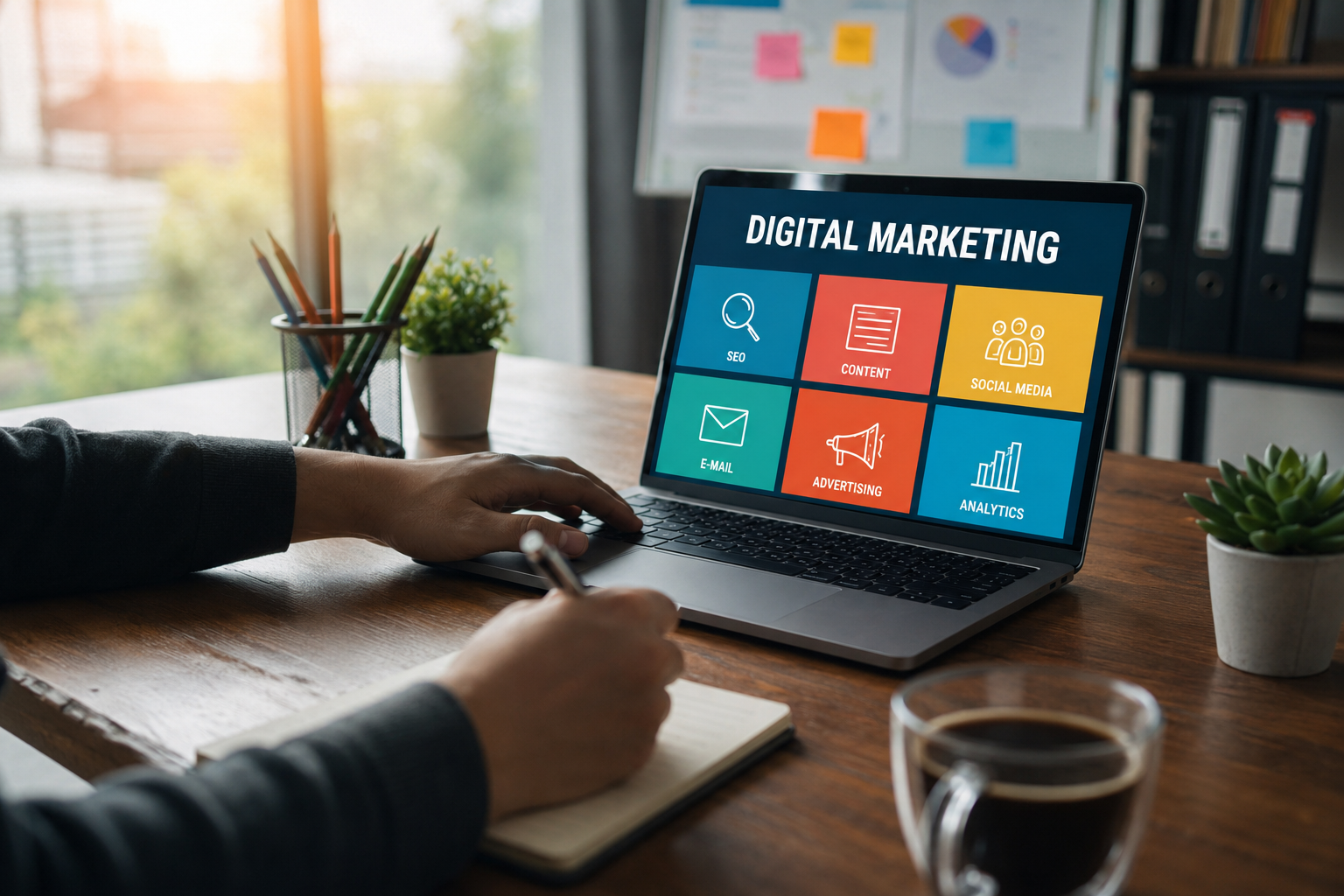

In today’s highly competitive digital landscape, having a strong online presence is no longer optional for small businesses. As consumer behavior continues to shift toward online platforms, businesses that embrace digital marketing are better positioned to attract customers, increase sales, and build long-term brand awareness. In 2026, digital marketing has become more data-driven, personalized, and AI-powered than ever before.
Whether you’re a startup, local business, retailer, healthcare provider, or service company, understanding digital marketing can help you compete with larger brands while maximizing your marketing budget. This guide explores the essential digital marketing strategies every small business should implement in 2026.
What Is Digital Marketing?
Digital marketing refers to promoting products and services through online channels such as search engines, websites, social media platforms, email, and paid advertising. Unlike traditional marketing methods, digital marketing allows businesses to reach specific audiences, track performance in real time, and optimize campaigns for better results.
The primary goal of digital marketing is to connect businesses with potential customers where they spend most of their time—online.
Why Digital Marketing Is Essential for Small Businesses
Small businesses often face challenges such as limited budgets, intense competition, and restricted market reach. Digital marketing helps overcome these obstacles by offering cost-effective ways to reach targeted audiences.
Some key benefits include:
- Increased brand visibility
- Better customer engagement
- Higher website traffic
- Improved lead generation
- Greater return on investment (ROI)
- Enhanced customer retention
- Measurable marketing performance
Unlike traditional advertising methods, digital marketing allows businesses to reach customers at various stages of their buying journey.
Understanding the Digital Marketing Landscape in 2026
The digital marketing environment continues to evolve rapidly. Several trends are shaping the future of online marketing:
Artificial Intelligence Integration
AI-powered tools now assist businesses with content creation, customer support, audience analysis, and marketing automation. Small businesses can leverage AI to improve efficiency and reduce operational costs.
Voice Search Optimization
With the increasing popularity of smart devices and virtual assistants, optimizing content for voice search has become essential. Businesses must focus on conversational keywords and question-based content.
Video-First Marketing
Short-form videos continue to dominate online engagement. Platforms such as Instagram Reels, YouTube Shorts, and TikTok remain valuable channels for audience growth.
Personalized Customer Experiences
Consumers expect tailored recommendations and customized content. Businesses that deliver personalized experiences often achieve higher conversion rates.
Data Privacy and Trust
As privacy regulations become stricter, businesses must prioritize transparent data collection and customer trust.
Building a Strong Online Presence
Before launching marketing campaigns, businesses need a solid online foundation.
Professional Website
Your website acts as your digital storefront. It should:
- Load quickly
- Be mobile-friendly
- Provide clear navigation
- Include strong calls-to-action
- Offer valuable content
- Have secure HTTPS encryption
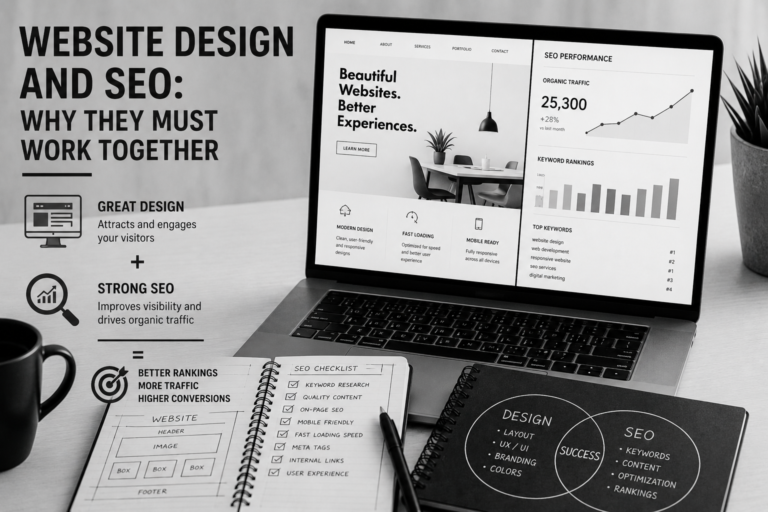
A poorly designed website can negatively impact user experience and search rankings.
Google Business Profile
For local businesses, maintaining an optimized Google Business Profile is essential. Accurate business information, customer reviews, photos, and regular updates can significantly improve local search visibility.
Consistent Branding
Businesses should maintain consistent branding across all online platforms, including:
- Logo
- Color scheme
- Typography
- Messaging
- Tone of voice
Consistency builds trust and recognition among potential customers.
Search Engine Optimization (SEO)
SEO remains one of the most effective long-term digital marketing strategies for small businesses.
What Is SEO?
Search Engine Optimization involves improving a website’s visibility in search engine results. Higher rankings lead to increased organic traffic and potential customers.
Key SEO Components
On-Page SEO
On-page SEO focuses on optimizing individual pages through:
- Keyword research
- Optimized page titles
- Meta descriptions
- Header tags
- Internal linking
- Image optimization
Technical SEO
Technical SEO ensures search engines can effectively crawl and index your website.
Important factors include:
- Website speed
- Mobile responsiveness
- XML sitemaps
- Structured data
- Secure HTTPS connection
Local SEO
Local SEO helps businesses attract customers within their geographic area.
Best practices include:
- Optimizing Google Business Profile
- Collecting customer reviews
- Using location-based keywords
- Creating local content
- Building local citations
Benefits of SEO
- Long-term visibility
- Consistent website traffic
- Increased credibility
- Better user experience
- Higher conversion rates
Although SEO requires time and effort, it often provides one of the highest returns on investment.
Content Marketing
Content marketing remains a cornerstone of successful digital marketing campaigns.
Why Content Matters
Quality content helps businesses:
- Educate customers
- Build authority
- Improve search rankings
- Generate leads
- Increase engagement
Types of Content
Businesses can create various content formats:
- Blog articles
- Case studies
- Videos
- Infographics
- E-books
- Podcasts
- Guides and tutorials
Blogging for Business Growth
A well-maintained blog can attract significant organic traffic. Businesses should focus on creating valuable content that addresses customer questions and challenges.
For example, a digital marketing agency might publish articles on:
- SEO tips
- Social media strategies
- Website optimization
- Lead generation techniques
Consistently publishing relevant content strengthens online authority and improves search engine rankings.
Social Media Marketing
Social media continues to play a crucial role in customer engagement and brand building.
Choosing the Right Platforms
Not every platform is suitable for every business.
Ideal for:
- Local businesses
- Community engagement
- Advertising campaigns
Best for:
- Visual brands
- Product showcases
- Short-form video content
Perfect for:
- B2B marketing
- Professional networking
- Thought leadership
YouTube
Effective for:
- Educational content
- Product demonstrations
- Brand storytelling
Social Media Best Practices
- Post consistently
- Engage with followers
- Use high-quality visuals
- Monitor analytics
- Respond to comments and messages
- Create valuable content
Businesses that actively engage with their audiences often build stronger customer relationships.
Pay-Per-Click (PPC) Advertising
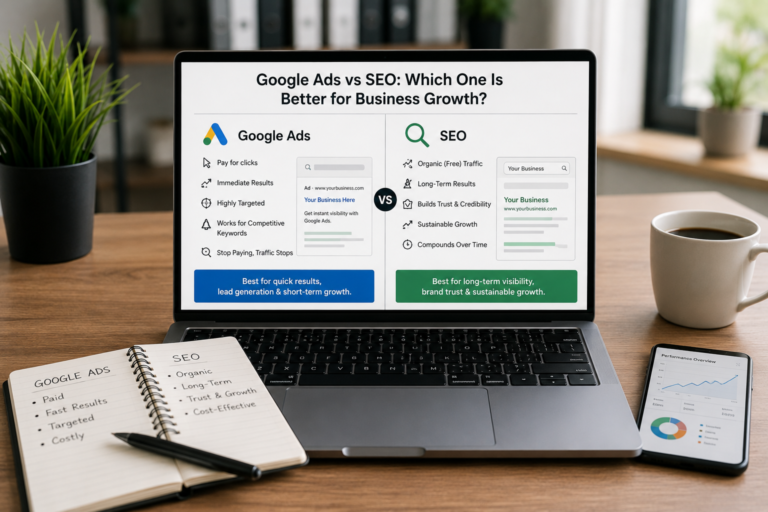
PPC advertising allows businesses to gain immediate visibility through paid campaigns.
Google Ads
Google Ads helps businesses appear at the top of search results for targeted keywords.
Benefits include:
- Instant traffic
- Precise targeting
- Measurable results
- Flexible budgeting
Social Media Advertising
Platforms such as Facebook, Instagram, and LinkedIn offer advanced audience targeting options.
Businesses can target users based on:
- Location
- Interests
- Age
- Occupation
- Online behavior
Maximizing PPC Success
- Conduct keyword research
- Create compelling ad copy
- Design optimized landing pages
- Monitor campaign performance
- Continuously refine targeting
PPC campaigns can generate leads quickly when managed effectively.
Email Marketing
Despite the rise of social media, email marketing remains one of the highest-converting digital channels.
Benefits of Email Marketing
- Direct communication with customers
- High ROI
- Personalized messaging
- Customer retention
- Automated follow-up sequences
Building an Email List
Businesses can grow email lists through:
- Website sign-up forms
- Lead magnets
- Free resources
- Newsletter subscriptions
Effective Email Campaigns
Successful emails typically include:
- Attention-grabbing subject lines
- Personalized content
- Clear calls-to-action
- Mobile-friendly design
Regular communication helps businesses stay connected with their audience.
Marketing Automation
Automation enables businesses to save time while improving customer experiences.
Common Automation Tools
Businesses can automate:
- Email sequences
- Lead nurturing
- Social media scheduling
- Customer support responses
- Reporting and analytics
Automation allows small teams to manage larger marketing efforts efficiently.
Analytics and Performance Tracking
One of digital marketing’s greatest advantages is measurable performance.
Key Metrics to Monitor
Businesses should track:
- Website traffic
- Conversion rates
- Bounce rates
- Cost per lead
- Customer acquisition cost
- Return on ad spend (ROAS)
- Email open rates
Popular Analytics Tools
Useful platforms include:
- Google Analytics
- Google Search Console
- Google Ads Dashboard
- Meta Business Suite
Data-driven decisions help businesses improve marketing effectiveness over time.
Common Digital Marketing Mistakes to Avoid
Many small businesses struggle because of avoidable mistakes.
Ignoring SEO
Without SEO, businesses miss valuable organic traffic opportunities.
Inconsistent Branding
Mixed messaging can confuse potential customers and weaken brand trust.
Neglecting Mobile Users
Most online traffic now comes from mobile devices.
Lack of Clear Goals
Marketing campaigns should always have measurable objectives.
Failing to Analyze Data
Without performance tracking, businesses cannot identify improvement opportunities.
Future of Digital Marketing Beyond 2026
Digital marketing will continue evolving with advancements in AI, automation, augmented reality, and personalized experiences. Businesses that remain adaptable and embrace new technologies will gain a competitive advantage.
Customer expectations will continue to rise, making high-quality content, excellent user experiences, and personalized communication even more important.
Conclusion
Digital marketing offers small businesses unprecedented opportunities to reach customers, build brand awareness, and drive sustainable growth. In 2026, success depends on combining multiple strategies, including SEO, content marketing, social media, PPC advertising, email marketing, and marketing automation.
Businesses that invest in a strong online presence and continuously optimize their digital marketing efforts can compete effectively in today’s fast-changing marketplace. By focusing on customer needs, leveraging data, and embracing emerging technologies, small businesses can create lasting success and achieve their growth goals.
Whether you’re just starting your digital journey or looking to improve your existing strategy, now is the perfect time to invest in digital marketing and position your business for long-term success.