

In a world where digital marketing channels continue to evolve at an unprecedented pace, businesses are constantly searching for the most effective way to attract customers, generate leads, and increase revenue. While social media platforms rise and fall, advertising costs continue to climb, and artificial intelligence reshapes online marketing, one strategy remains consistently powerful: Search Engine Optimization (SEO).
In 2026, SEO is not only relevant—it has become one of the most valuable long-term investments a business can make. Companies that prioritize SEO continue to enjoy sustainable traffic, higher brand credibility, better user experiences, and significantly lower customer acquisition costs compared to many paid marketing channels.
Whether you’re a local business, eCommerce store, startup, or enterprise brand, understanding the importance of SEO can help you build a strong online presence and stay ahead of your competitors. This guide explores why SEO remains the most powerful marketing strategy in 2026 and how businesses can leverage it for long-term success.
What Is SEO?
Search Engine Optimization (SEO) is the process of improving a website’s visibility in search engine results pages (SERPs). The goal is to help websites rank higher for relevant search queries so potential customers can find them organically.
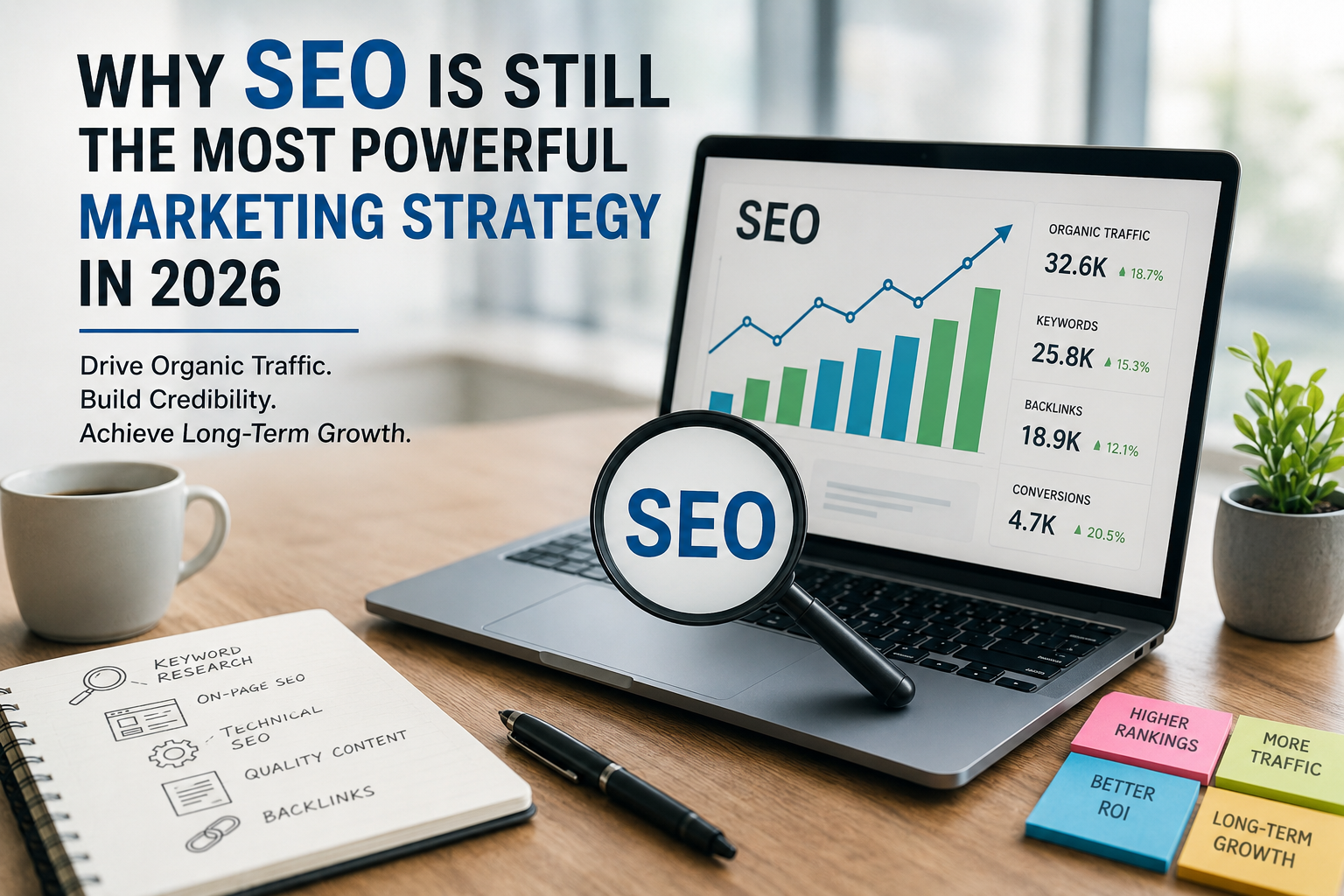
SEO involves multiple components, including:
- Keyword research
- On-page optimization
- Technical SEO
- Content creation
- User experience improvements
- Link building
- Local SEO
- Mobile optimization
Unlike paid advertising, SEO focuses on earning traffic naturally through search engines such as Google.
Why SEO Continues to Dominate Digital Marketing
Despite the rapid growth of social media, influencer marketing, and paid advertising, SEO continues to deliver exceptional results.
People Still Use Search Engines Every Day
Search engines remain the starting point for most online experiences. When people need information, products, services, reviews, or solutions, they turn to search engines.
Common searches include:
- Best restaurants near me
- Digital marketing agency
- Affordable web design services
- Product reviews
- Healthcare information
- Educational resources
Businesses that rank prominently for these searches have a significant advantage over competitors.
Organic Traffic Is Highly Targeted
SEO attracts users who are actively looking for specific information, products, or services.
For example:
A person searching for “best digital marketing agency for small business” is already interested in marketing services and may be ready to make a purchase decision.
This intent-driven traffic often converts better than traffic from many other marketing channels.
SEO Provides Long-Term Results
One of SEO’s greatest strengths is sustainability.
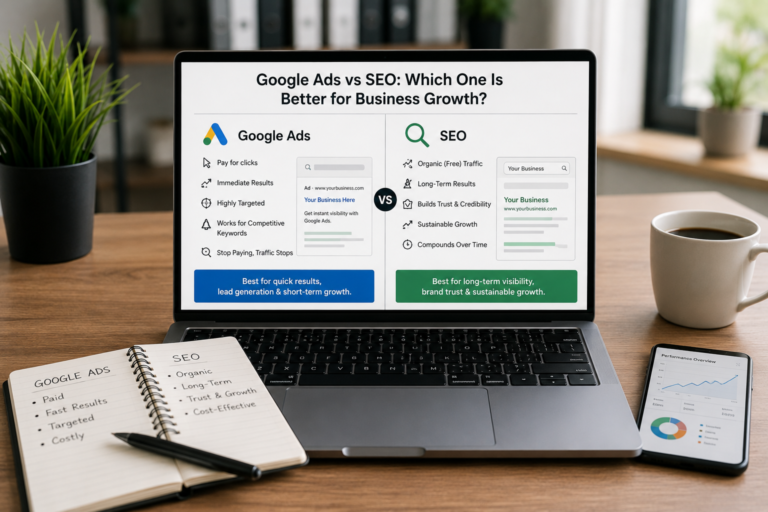
Paid Advertising Stops When Spending Stops
With platforms like Google Ads and Facebook Ads, traffic disappears as soon as the advertising budget runs out.
SEO works differently.
A well-optimized page can continue generating traffic, leads, and sales for months or even years after publication.
Compound Growth Effect
Every optimized page adds value to your website.
Over time:
- More pages get indexed
- More keywords rank
- More backlinks are earned
- Domain authority increases
This creates a compounding effect that strengthens your online presence.
SEO Delivers Outstanding Return on Investment
Marketing budgets matter, especially for small businesses.
SEO consistently offers one of the highest returns on investment because:
- Traffic is free after ranking
- Leads are highly qualified
- Brand visibility increases continuously
- Customer acquisition costs decrease over time
Although SEO requires an initial investment in content and optimization, the long-term value often exceeds that of many paid marketing channels.
AI Has Made SEO More Important, Not Less
Many business owners believe artificial intelligence will replace SEO.
The reality is quite different.
AI Relies on Quality Content
Search engines increasingly use AI to understand user intent and content quality.
Businesses that create helpful, informative, and authoritative content are rewarded with better rankings.
AI Search Results Still Need Trusted Sources
Even AI-powered search experiences rely on information from trusted websites.
If your website ranks well and provides valuable information, AI systems are more likely to reference your content.
Human Expertise Remains Essential
Search engines continue prioritizing content that demonstrates:
- Experience
- Expertise
- Authority
- Trustworthiness
These qualities cannot be fully automated and remain critical for successful SEO.
SEO Builds Trust and Credibility
Consumers trust search engines.
When a business appears on the first page of search results, users often perceive it as more credible and reliable.
Higher Rankings Increase Brand Authority
Users naturally assume that top-ranking websites offer:
- Better information
- Higher-quality services
- Greater expertise
Strong rankings help establish trust before customers even visit your website.
Consistent Visibility Reinforces Brand Recognition
The more often users see your business in search results, the more familiar your brand becomes.
This repeated exposure improves:
- Brand awareness
- Customer confidence
- Purchase likelihood
Local SEO Drives Real Customers
For local businesses, SEO has become even more important in 2026.
Mobile Search Continues to Grow
Consumers frequently search for nearby businesses while on the go.
Examples include:
- Restaurants near me
- Car repair shops nearby
- Dental clinics near me
- Digital marketing agencies in my city
Google Business Profile Optimization
A properly optimized Google Business Profile helps businesses:
- Appear in local searches
- Show up on Google Maps
- Generate phone calls
- Increase store visits
Local SEO directly impacts customer acquisition for location-based businesses.
SEO Enhances User Experience
Modern SEO is no longer just about keywords.
Search engines now prioritize websites that offer exceptional user experiences.
Website Speed Matters
Fast-loading websites:
- Improve rankings
- Reduce bounce rates
- Increase conversions
Mobile Optimization Is Essential
Most internet users access websites through mobile devices.
Search engines favor websites that provide seamless mobile experiences.
Clear Navigation Improves Engagement
Well-structured websites help users find information quickly, resulting in:
- Longer visit durations
- Lower bounce rates
- Better conversion rates
SEO and user experience now work hand in hand.
Content Marketing and SEO Work Together
Content remains the foundation of successful SEO.
Valuable Content Attracts Traffic
Businesses that consistently publish helpful content can rank for hundreds or even thousands of keywords.
Examples include:
- Blog posts
- Guides
- Tutorials
- Case studies
- Industry insights
- Product comparisons
Content Builds Authority
When businesses answer customer questions effectively, they become trusted industry resources.
This authority leads to:
- More backlinks
- Higher rankings
- Increased trust
- Better conversions
SEO Supports Every Stage of the Customer Journey
Customers rarely make purchasing decisions instantly.
SEO helps businesses engage users throughout the buying process.
Awareness Stage
Potential customers search for information.
Example:
“What is SEO?”
Consideration Stage
Users compare solutions.
Example:
“Best SEO agency for small businesses”
Decision Stage
Customers are ready to buy.
Example:
“SEO services near me”
SEO allows businesses to appear at every stage of this journey.
Voice Search and Conversational Queries
Voice search continues to grow thanks to smart devices and AI assistants.
Users now ask questions naturally, such as:
- What is the best digital marketing company near me?
- How can I improve my website ranking?
- Which SEO strategy works best for small businesses?
Businesses that optimize content around conversational search patterns gain additional visibility.
Technical SEO Remains Critical
A website must be technically sound to perform well in search engines.
Important technical SEO factors include:
Website Security
Secure HTTPS websites build trust and improve rankings.
Crawlability
Search engines must be able to access and understand website content.
Structured Data
Schema markup helps search engines better understand information and display rich results.
Core Web Vitals
Google continues emphasizing:
- Loading performance
- Interactivity
- Visual stability
Technical optimization remains a fundamental SEO requirement.
SEO Outperforms Many Other Marketing Channels
SEO vs Social Media
Social media is excellent for engagement but often provides short-lived visibility.
SEO delivers ongoing traffic long after content is published.
SEO vs Paid Advertising
Paid advertising generates immediate results but requires continuous spending.
SEO builds long-term assets that continue generating traffic organically.
SEO vs Traditional Advertising
Traditional advertising often struggles with precise targeting and performance measurement.
SEO allows businesses to target specific audiences and track results accurately.
Common SEO Mistakes Businesses Should Avoid
Many businesses fail to achieve SEO success because of avoidable mistakes.
Ignoring Keyword Research
Without understanding what customers search for, content may never rank.
Publishing Low-Quality Content
Search engines prioritize content that provides genuine value.
Neglecting Technical SEO
Slow websites and indexing issues can significantly hurt rankings.
Focusing Only on Rankings
The ultimate goal is not rankings alone but generating leads, customers, and revenue.
The Future of SEO Beyond 2026
SEO will continue evolving as search technology advances.
Future trends may include:
- More AI-driven search experiences
- Greater personalization
- Enhanced voice search capabilities
- Visual search growth
- Improved user intent understanding
However, the core principle remains unchanged:
Businesses that provide valuable information and exceptional user experiences will continue to succeed.
Conclusion
SEO remains the most powerful marketing strategy in 2026 because it combines visibility, credibility, sustainability, and profitability. While many marketing channels require continuous spending, SEO builds long-term assets that generate traffic, leads, and sales over time.
Businesses that invest in quality content, technical optimization, local SEO, and user experience position themselves for lasting growth in an increasingly competitive digital landscape.
As technology continues to evolve, SEO will adapt alongside it, but its fundamental purpose remains the same: helping businesses connect with customers exactly when they are searching for solutions.
For companies looking to build a strong online presence, increase brand authority, and achieve sustainable growth, SEO remains one of the smartest investments they can make in 2026 and beyond.